
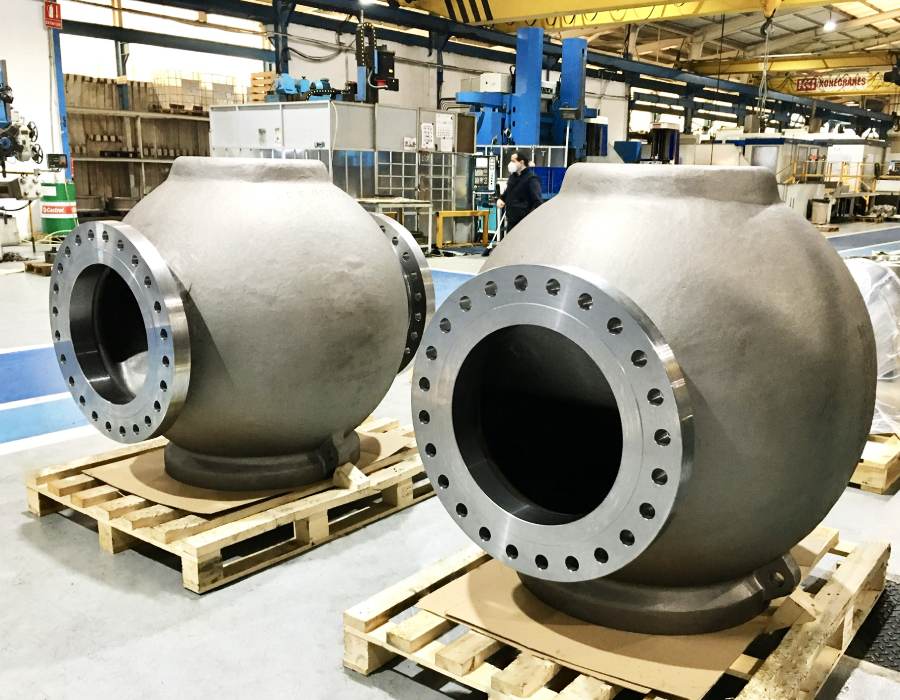
There are many types of industrial valves, but in a process environment, the difference between choosing the right one or the wrong one is not seen in the catalogue, but in the line itself: loss of tightness in industrial valves, flow control problems, premature wear, increased maintenance and lower system reliability. For this reason, before deciding between a gate, globe, ball, butterfly, check or relief valve, it is worth understanding what function it must perform, under what conditions it will operate, and what mechanical demands the component will have to withstand.
If your goal is simply to review the basics of the topic, you can first read more about what a valve is. But if what you need is to understand which industrial valve to choose according to the application, this article should help you make a decision with stronger technical judgement and less improvisation.
Need support evaluating critical industrial valve components?
Tell us the valve type, material, nominal diameter, service conditions and inspection requirements. We assess your project and define a technical approach focused on precision in functional areas, sealing reliability and dimensional control.
Request a technical assessmentWhy is it so important to choose correctly among the different types of industrial valves?
In many installations, the valve may seem like just another part of the assembly, but in reality it determines critical aspects such as shut-off, regulation, safety, protection against overpressure and overall system durability. When the selection does not match the fluid, operating pressure, temperature, chemical aggressiveness or operating cycle, problems appear quickly: leaks, erosion, corrosion, process instability, and replacement or repair costs.
For this reason, the applications of industrial valves should not be analysed only from a theoretical perspective. What really matters is how each design performs in service, what demands its functional surfaces must withstand, how the sealing areas behave, and how the quality of execution affects the final performance of the component.
Types of industrial valves according to their main function
A useful way to classify the different types of industrial valves is to start with the function they perform within the system.
Isolation valves
Their main purpose is to fully open or completely shut off the flow of the working medium. This group usually includes designs where shut-off capability and sealing resistance in service are the main priorities. When the project requires reliable and repeatable shut-off, seat quality, alignment and precision in critical areas become decisive.
Control valves
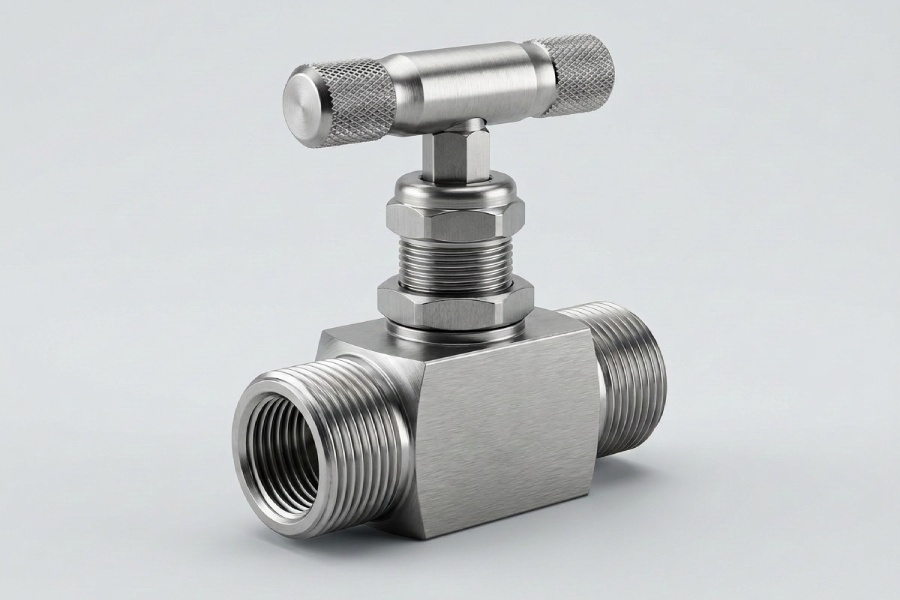
When the process requires not only opening or closing, but also more precise flow adjustment, control valves become increasingly important. In these cases, the ability to maintain stability, response and control in service directly affects system performance. And when the application requires especially fine adjustment at specific points in the line, needle control valves provide a more specific solution for that level of precision.
Check valves
They are used to prevent backflow of the medium. In critical lines, choosing this type of solution correctly helps protect upstream equipment, stabilise the system and avoid damage caused by flow reversal. It is not enough to know that it is a check valve; what also matters is how its geometry is designed and what functional demands it must withstand.
Relief and safety valves
Their function is to protect the installation against overpressure. Repeatability in opening and closing, as well as reliability in service, are critical when the system operates under severe conditions.
Types of industrial valves according to their design
If, in addition to function, we analyse the valve’s construction design, the classification becomes more useful for both engineering and procurement.
Gate valves
They are mainly used when the goal is to achieve the freest possible flow path and low pressure drop in the open position. They are not usually the best option for fine regulation, but they can be well suited for full open or full shut-off service.
Globe valves
They are commonly used when the objective is to regulate flow or control the process with greater precision. Their performance depends heavily on the internal geometry, the plug, and the way the shut-off mechanism operates.
Ball valves
They offer quick shut-off and are highly valued in certain applications for their operational simplicity and sealing performance. The right selection will depend on the service environment, the material, and the demands of the process.
Butterfly valves
Among the different types of industrial valves, butterfly valves play an important role in services where compactness, ease of operation and operational simplicity are key factors. Even so, not all of them respond in the same way to the same shut-off, pressure or maintenance requirements. That is why it is useful to understand more clearly what defines a butterfly valve, what affects butterfly valve operation in service, and which inspection and maintenance tasks influence butterfly valve maintenance in order to preserve reliability over time.
Diaphragm valves
Diaphragm valves are especially useful in services where it is important to isolate the actuation mechanism from the process medium, or where operating conditions require a configuration that supports control and sealing integrity. Their suitability depends on the type of fluid, the chemical demands of the environment, and the performance expected from the component in service. To better understand in which cases they may be an appropriate solution, it is worth reviewing what characterises a diaphragm valve.
Applications of industrial valves according to sector and service
There is no single industrial valve that is suitable for everything. What exists are solutions that are more or less appropriate depending on the type of process, the working medium, the shut-off requirements, the pressure, the temperature and the level of reliability the installation needs. For this reason, when analysing the applications of industrial valves, it is not enough to classify valve families; it is necessary to understand what problems the component must solve in each operating environment.
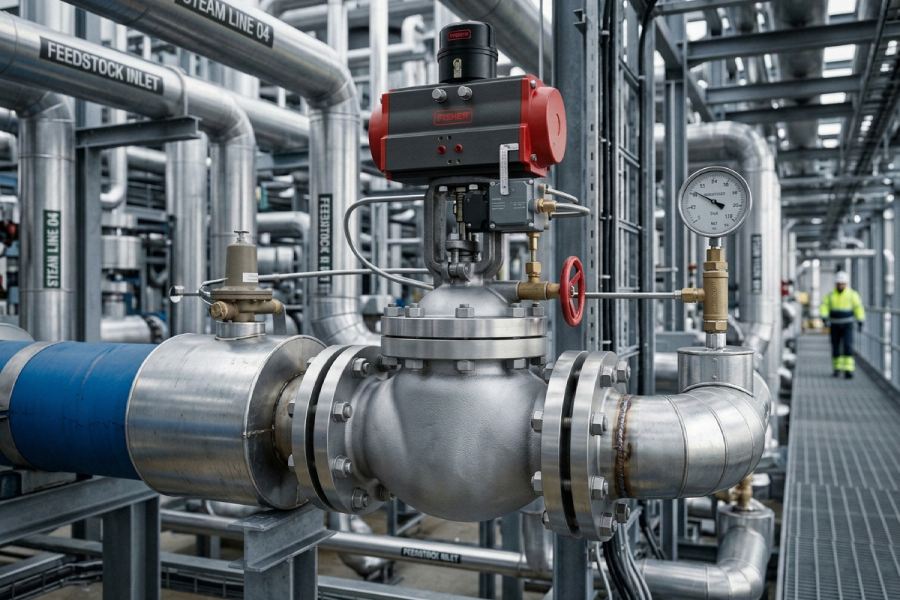
Oil & Gas and petrochemical
In Oil & Gas and petrochemical applications, a poorly selected valve rarely results in just a minor issue. It can compromise process continuity, increase operational risk, accelerate component wear and create shut-off problems under especially demanding conditions. In this type of service, corrosion resistance, compatibility with the medium, pressure response and the functional stability of critical areas during operation all carry significant weight.
Cryogenic service
When service operates at very low temperatures, both material behaviour and the functional demands placed on the component change. Here, selection cannot be based on standard criteria, because the valve must perform reliably under conditions where shut-off, dimensional stability and material compatibility become far more important. For those who need to explore these operating conditions in greater depth, it is useful to read more about cryogenic valves.
Water, general processes and control services
In water applications, general processes and control lines, the priority is usually to find a balance between durability, stable performance, ease of operation and maintenance costs. However, even in these environments, choosing the wrong design can lead to performance losses, operating difficulties or poor system response. For this reason, the decision should not focus only on the name of the valve type, but on which solution is best suited to the flow rate, the fluid, the pressure, the temperature and the level of control required by the process.
How to choose between different types of industrial valves without staying at a generic classification
The most useful part of an article about types of industrial valves is not the list of valve families, but the criteria that allow you to make a sound decision. In a real project, the problem usually does not come from not knowing the name of the valve, but from choosing a solution that does not respond well to the medium, the service conditions or the demands of the installation.
1. The fluid and the real operating conditions
Working with water, gas, steam, corrosive fluids or media containing suspended solids is not the same. Each environment imposes different demands on shut-off performance, wear, material compatibility and the functional stability of the component. For this reason, before selecting a valve, it is advisable to define precisely what service it will have to withstand and how that environment may affect its behaviour over time.
2. Shut-off requirements and sealing performance in industrial valves
When the process does not allow leakage, the decision stops being generic. At that point, seats, contact surfaces, shut-off geometries and the tolerances that determine the real behaviour of the component become especially important. A valve may appear suitable on paper and still present sealing or repeatability problems if these areas are not executed with the necessary rigor.
3. Materials and coatings
Choosing the right type of valve is not enough if the material does not perform well in the working environment. In many services, resistance to corrosion, wear or specific chemical conditions is just as important as the component design itself. For this reason, when the application is more aggressive, it is useful to expand your criteria by reviewing the types of coatings used for industrial valves in extreme environments.
4. Manufacturing precision
In demanding applications, final quality does not depend only on the design, but also on how the component is executed. Alignment, dimensional repeatability and the quality of functional surfaces directly influence shut-off performance and valve reliability in service. If you want to explore that relationship between accuracy and performance in more depth, [precision in CNC machining] may be helpful.
5. Component verification
When a valve must operate in a critical environment, reliability should not be taken for granted. Verifying sensitive areas, functional geometries and possible defects is an essential part of the control process. In this context, learning more about non-destructive testing helps explain why inspection is not an extra, but a guarantee of performance and safety.
Which valve areas really determine performance
A valve’s behaviour in service does not depend only on its type or material. It also depends on how its functional areas are executed and on the level of control applied during manufacturing. In demanding applications, small deviations in specific areas can result in loss of shut-off performance, poorer operating response, more wear and shorter component life.
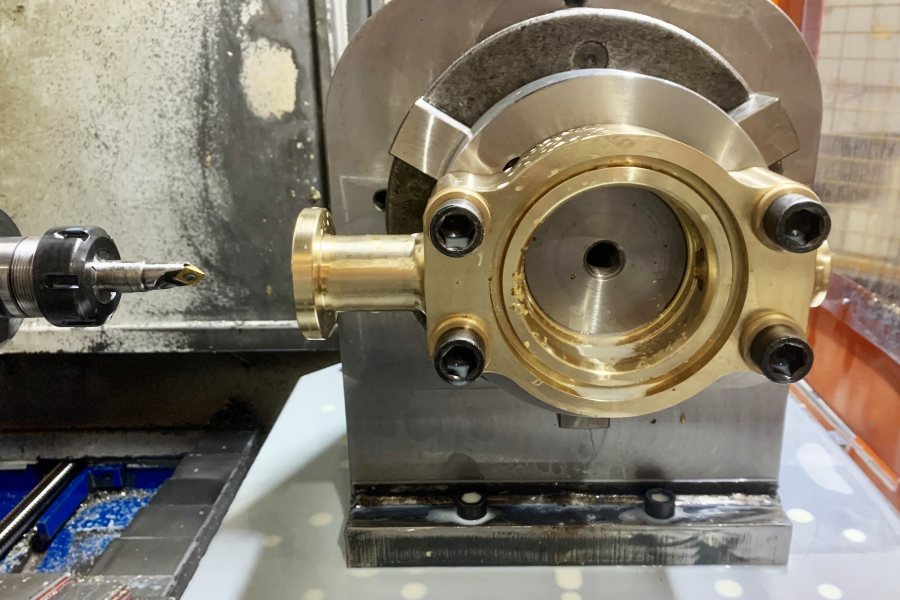
Among the areas that have the greatest influence on valve performance are the seats, sealing surfaces, housings, internal alignment, the dimensional repeatability of functional faces and the connections. When any of these areas is not executed with the required rigor, the valve may appear correct on paper and still perform below expectations once it enters service.
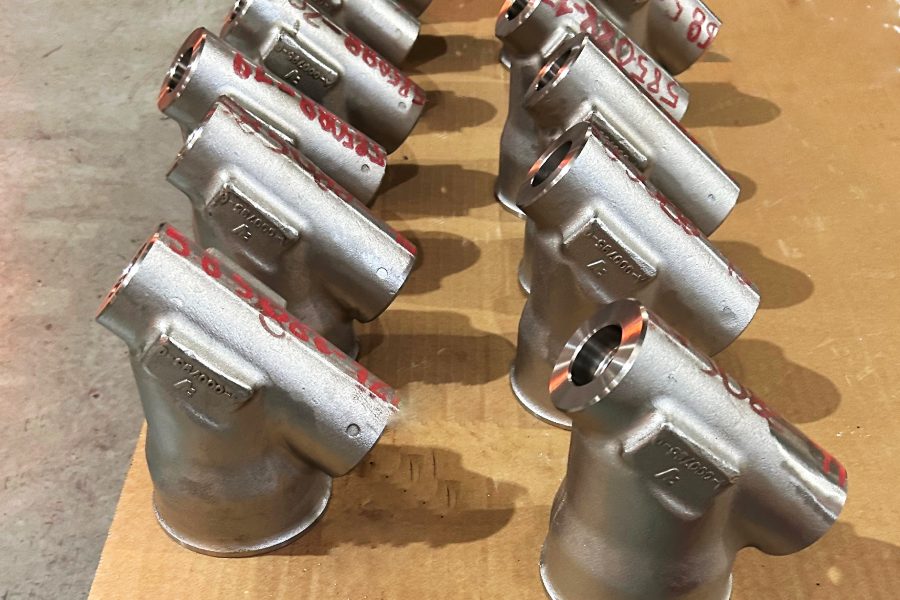
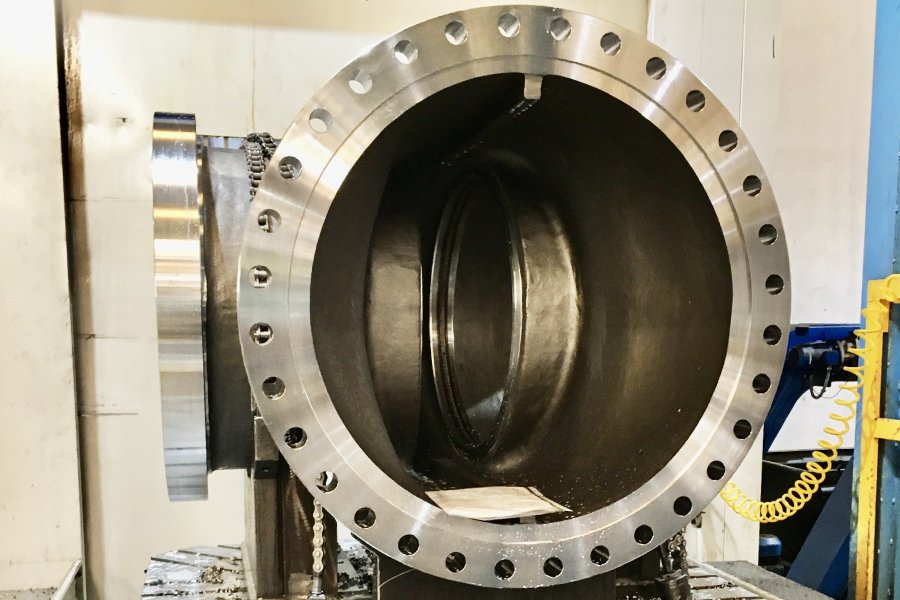
This requirement becomes even more critical when the component operates with large diameters or complex geometries. In those cases, the value of precise execution becomes even greater, especially in projects related to the machining of large valve components. And when the key point lies in the valve body itself, its geometric references and the quality of machining, it makes even more sense to explore industrial valve body machining in greater depth.
How Asimer Group can support industrial valve projects
When a company is dealing with the selection or execution of components for industrial valves, the challenge rarely lies only in identifying a valve family. What is truly decisive is assessing whether that component will perform properly in service, whether its functional areas have been executed with the required level of precision, and whether the material, shut-off performance and manufacturing quality are aligned with the demands of the project.
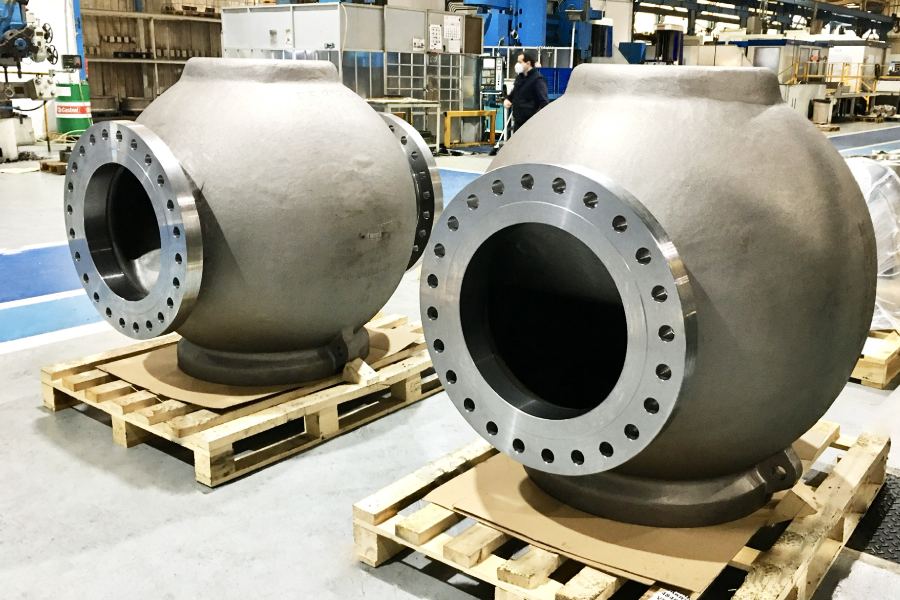
That is where Asimer Group can add value. Not only through component machining, but through a more technical project-based approach: material analysis, review of critical geometries, dimensional control, evaluation of sealing areas, and support for parts that must operate reliably under demanding conditions.
This approach is especially useful when the customer needs to reduce the risk of selection errors, improve component stability in service, or ensure that the body, functional surfaces and critical tolerances perform with the level of precision required by the application. At that point, rather than speaking about a valve in generic terms, what really matters is understanding how the actual component will behave once it enters operation.
What should be clear before choosing an industrial valve
Choosing between different types of industrial valves should not be reduced to a generic classification or a decision based only on a catalogue. The right selection depends on the service, the design, the material, the shut-off requirements, the operating pressure, the type of fluid, corrosion resistance and the quality with which the critical areas of the component are executed.
When this evaluation is done properly, the system gains reliability, reduces maintenance needs, improves process performance and minimises operational risks. And when the application also requires geometric precision, control of functional surfaces and technical validation at sensitive points, it makes sense to rely on a partner capable of analysing the component beyond a theoretical classification.
Frequently asked questions about types of industrial valves
Which type of industrial valve should be chosen according to the application?
The answer depends on the service. A valve for isolation is not selected in the same way as one for regulation, nor is a solution for a general process selected in the same way as one for an aggressive environment, high-temperature service or severe sealing requirements in industrial valves. What matters is aligning function, fluid, pressure, material, expected maintenance and shut-off requirements before making a decision.
What is the difference between an isolation valve and a control valve?
An isolation valve is mainly designed to fully open or completely shut off the flow of the medium. A control valve, by contrast, is intended to modulate flow or stabilise process conditions. If the reader wants to explore this second group in more depth, they can read more about flow control valves.
What types of industrial valves are used in corrosive or demanding processes?
In these cases, it is not enough to choose a valve family; it is also necessary to evaluate materials for industrial valves, operating conditions and possible surface solutions. When the environment is more aggressive, it may be useful to review the types of coatings used for industrial valves in extreme environments.
Which areas of a valve have the greatest impact on sealing performance and reliability?
Sealing surfaces, seats, housings, internal alignment and other critical areas of the component are decisive. A small deviation in these areas can affect the functional behaviour of the assembly.
How does machining influence the performance of an industrial valve?
Far more than it may seem. Machining quality affects dimensional repeatability, the quality of functional surfaces and shut-off performance in service. If the component must perform with tight tolerances and reliable behaviour in sensitive areas, this part should be supported by precision in CNC machining.
When is it advisable to require additional inspection or verification for an industrial valve?
When the application is critical, the material is demanding, or the project requires greater functional safety, it makes sense to reinforce control through specific verification. In these contexts, a reference such as non-destructive testing is useful for understanding what types of checks can help validate the component.