
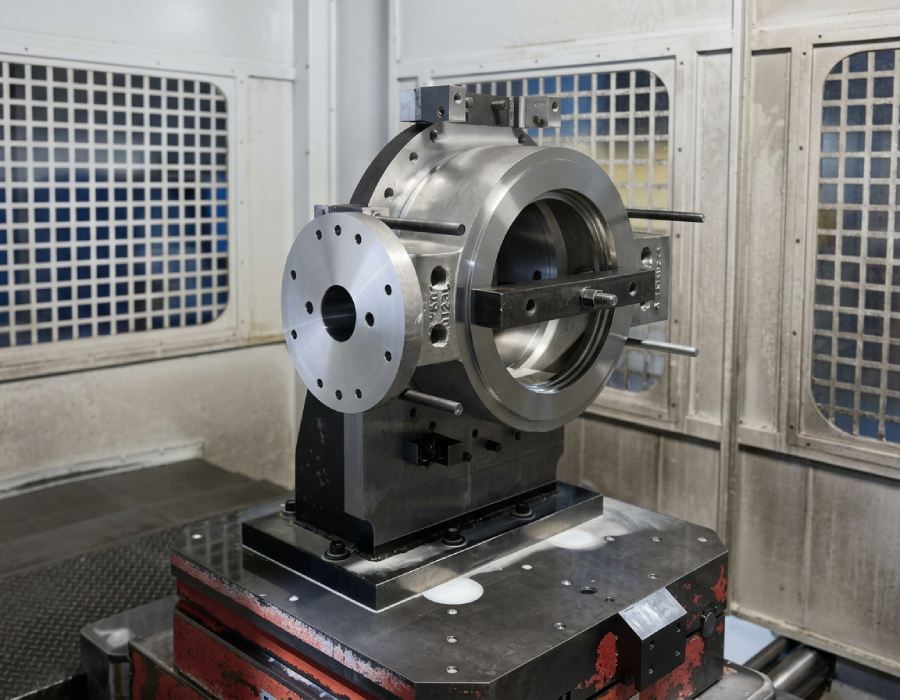
Machining duplex and super duplex valves requires a much more precise strategy than the one used for other conventional stainless steels. In sectors such as oil & gas, petrochemicals, cryogenics or aggressive fluid handling, these materials are selected for their high corrosion resistance, strong mechanical performance and reliability in severe service. However, that advantage in operation also implies greater demands during manufacturing.
When a company needs a supplier for duplex steel valve machining or super duplex valve machining, it is not just looking for production capacity. It is looking for a partner capable of controlling the process, anticipating how the material behaves during cutting and ensuring that the final component meets the required geometry, surface finish and in-service performance. At Asimer Group, this work is approached from both a technical and commercial perspective: producing critical components with sound judgement, traceability and a real focus on final reliability.
Machining duplex and super duplex valves: why these materials are used in critical applications
Duplex and super duplex stainless steels have become benchmark materials for industrial valves intended for aggressive media or extreme working conditions. Their combination of mechanical strength and corrosion resistance makes them especially suitable for environments where a standard stainless steel may fall short.
In these types of applications, the goal is not only to prevent wear. It is also to minimise phenomena such as localised corrosion, pitting or stress corrosion cracking, which can compromise the service life of the component even when the geometry is correct. That is why talking about industrial valves in duplex and super duplex means talking about in-service reliability, operational safety and risk reduction in installations where a shutdown or a leak carries a high technical and economic cost.
This directly affects machining. The more demanding the service environment, the more important it is for the part to be right from the beginning. It is not enough to simply meet a dimension. The process must be controlled so that the material retains its performance and the valve maintains its reliability under real operating conditions.
What changes in duplex and super duplex valve machining compared with other stainless steels
This is where the real difference lies compared with the pillar page and the other articles in the cluster. The focus is not only on the valve itself, but on how the material conditions the process.
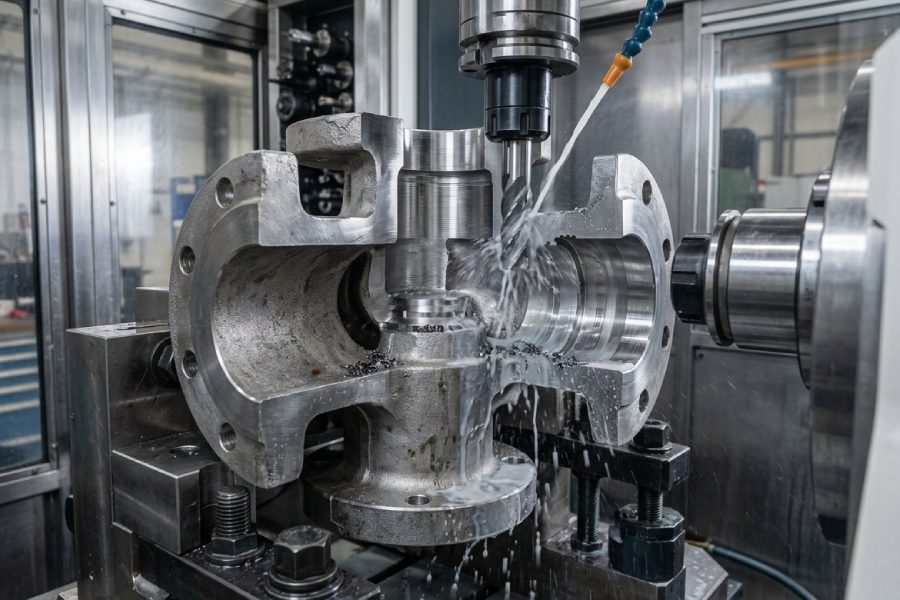
Duplex and super duplex stainless steels behave in a more demanding way during machining than many austenitic stainless steels. In practice, this results in several challenges:
- greater tendency to local heat build-up
- higher sensitivity to tool wear
- the need for tighter chip evacuation control
- stricter cutting parameter requirements
- the risk of affecting dimensional stability if the sequence is not properly planned
- the need to protect surface finish in functional areas
All of this means that super duplex steel machining for valves cannot be approached with a generic logic. It requires adapting the strategy, tooling, cutting speed, feed rates and process control to the actual behaviour of the material.
At Asimer Group, this means working with machining criteria designed for critical components, where the goal is not just to produce the part, but to avoid deviations that could later compromise sealing performance, assembly or customer validation.
Duplex vs super duplex: when to choose each material in industrial valves
Although they are often mentioned together, they do not serve exactly the same purpose.
Duplex is used when a balanced combination of mechanical strength and good corrosion resistance is required. It is a very attractive solution for many process valves, especially when the goal is to achieve durability and solid performance without moving directly to more demanding materials.
Super duplex, by contrast, is intended for more severe conditions. It typically comes into play when the aggressiveness of the medium, the presence of chlorides, the marine environment or the criticality of the service makes it necessary to go one step further. In these cases, the component must offer greater resistance in environments where the integrity of the material cannot be put into question.
From an industrial point of view, this difference also affects supplier selection. Manufacturing standard stainless steel valves is one thing; taking on valve machining projects for corrosive environments or components with high metallurgical demands is something very different. Material selection is not only an engineering decision. It also determines the type of machining, inspection and validation that will be required afterwards.
What valve areas require tighter control when machined in duplex and super duplex
The areas that usually require the highest level of control are:
- joint faces
- seat pockets
- functional diameters
- internal passages
- support or guiding areas
- sealing surfaces
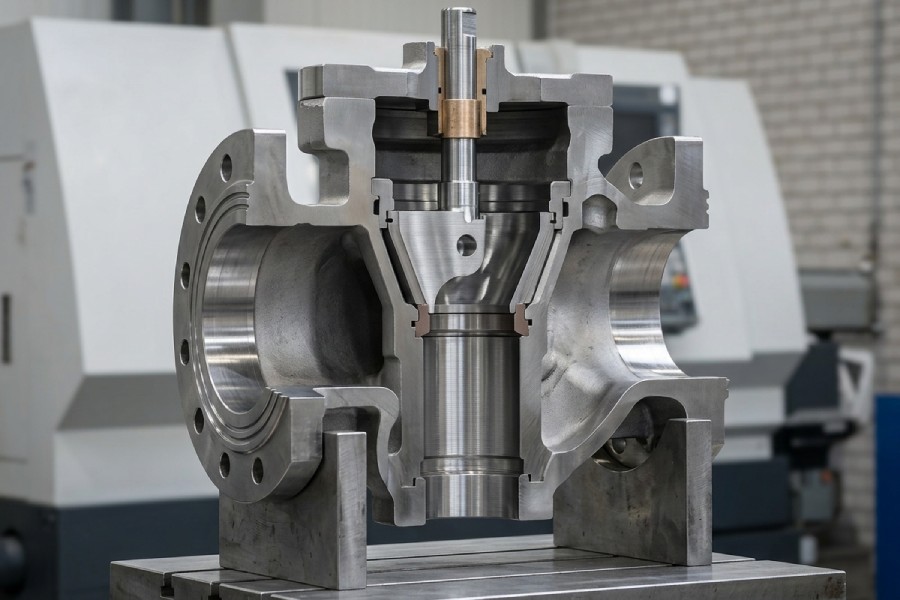
In these areas, the behaviour of duplex or super duplex during cutting can directly affect surface finish, geometric stability and the sealing capability of the component. In this type of part, an important share of the final result also depends on the machining of industrial valve bodies, especially when functional surfaces must maintain very demanding tolerances and finishes.
Machining duplex and super duplex valves in corrosive environments and severe applications
The true value of these materials becomes clear when the valve is expected to operate under conditions where other steels may suffer premature degradation. In these cases, the manufacturing process must match the service demands.
This commonly occurs in:
- oil & gas installations
- petrochemical systems
- cryogenic applications
- marine environments
- lines handling aggressive fluids
- installations with high humidity, salinity or risk of chemical attack
That is why machining duplex components for oil & gas or machining super duplex components should not be seen as a minor variation, but as a specialism. The part must not only offer chemical resistance; it must also be properly resolved in terms of geometry and surface finish so as not to introduce additional weaknesses in service.
At this point, complementary solutions such as types of coatings for industrial valves in extreme environments or welding for corrosive environments may also make sense, depending on the type of project, the design and the aggressiveness of the medium.
How to control the process in duplex and super duplex valve machining
When working with these types of materials, process control stops being an added value and becomes a necessity.
There are several factors that require particularly close attention:
Heat management
Heat has a direct influence on tool behaviour, cutting stability and final surface finish. If it is not properly controlled, problems such as premature wear, internal stresses or lack of consistency in functional areas may appear.
Tooling and cutting strategy
With these materials, tool selection cannot be generic. It must be adapted to the hardness, the geometry of the component and the type of operation being carried out. The same applies to speeds and feeds.
Machining sequence
The sequence matters. In complex components, especially when several references or critical surfaces are involved, the order of operations can influence the final result and repeatability.
Surface finish control
Surface finish is critical when the valve includes sealing or support surfaces. A poorly machined functional surface can compromise final validation even if other dimensions appear correct. This requirement becomes even more important in large valve machining projects, where component size and geometric complexity make tighter process control essential. In this context, experience in CNC machining precision is key to achieving functional surfaces consistent with both the material requirements and the final application.
Dimensional control and validation in duplex and super duplex industrial valves
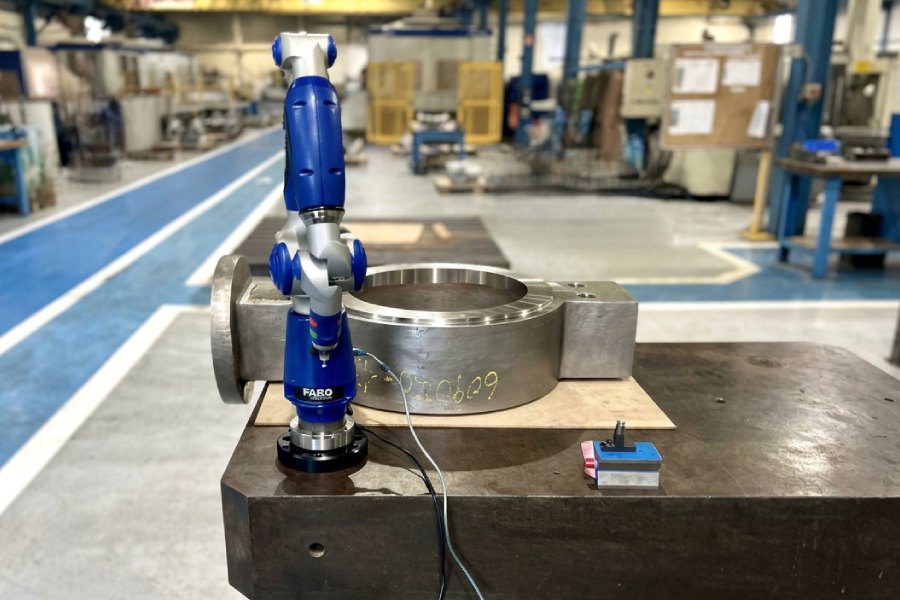
In components made from duplex or super duplex stainless steel, validation at every stage is essential to ensure that the part maintains the geometry, surface finish and integrity required by its application. That is why this type of project requires control resources adapted to the criticality of the component. Tools and resources such as a metrology and quality inspection room, measuring arm, non-destructive testing and liquid penetrant testing make it possible to detect dimensional deviations or surface defects before the valve reaches assembly, testing or final acceptance.
What Asimer Group brings to duplex and super duplex valve machining
In this type of project, the difference is not only in the machinery available. It lies in understanding how the material behaves, what risks it introduces during manufacturing and what controls are needed to deliver a reliable component.
At Asimer Group, this approach translates into:
- work based on drawings or sample parts
- adaptation to special alloys
- process control from the earliest stages
- metrological and surface validation
- technical resources focused on critical components
- experience in sectors with real reliability requirements
This approach is especially relevant for manufacturers and technical departments that cannot afford rework on high-cost materials, assembly issues, rejections due to surface finish or geometry, loss of time on critical components or uncertainty about how the valve will perform in service.
In projects where the industrial context requires it, this work can be complemented by high-precision machining solutions for the oil and gas sector or by developments aimed at extreme conditions, such as high-precision machining for cryogenic applications in industrial pumps and valves.
Duplex and super duplex valve machining as a strategic decision
Choosing the right material is important, but choosing how it is manufactured is equally important. A valve machined in duplex or super duplex with a poorly resolved process can lose much of the value that the material was supposed to provide.
That is why duplex and super duplex valve machining should be understood as a strategic decision for manufacturers working with corrosive applications, aggressive fluids or severe environments. It is not only about producing a resistant component. It is about ensuring that the part reaches the customer with the precision, surface finish and reliability required by its real service conditions.
Frequently asked questions about duplex and super duplex valve machining
What advantages do duplex and super duplex industrial valves offer?
They provide high corrosion resistance, strong mechanical performance and better behaviour in severe environments, especially in oil & gas, petrochemicals and media with high chemical aggressiveness.
Is duplex steel valve machining more complex than machining other stainless steels?
Yes. Duplex steel valve machining requires tighter control of heat, tooling, chip evacuation and process stability in order to avoid deviations or loss of surface quality.
When is it advisable to use super duplex instead of duplex?
When the level of corrosive demand, the criticality of the medium or the service conditions require superior behaviour against phenomena such as pitting or stress corrosion cracking.
What controls are recommended before validating a valve made from these materials?
Dimensional control, verification of functional surfaces and, where applicable, non-destructive testing and liquid penetrant testing.
What type of customer usually needs this type of machining?
Valve manufacturers, technical purchasing departments, process engineering teams and companies working with aggressive fluids, severe conditions or high-value materials.
Need duplex or super duplex valve machining for demanding environments?
Tell us the valve type, material, nominal diameter, service conditions and inspection requirements. We will review your project and define a technical strategy focused on precision, corrosion resistance and in-service reliability.
Request technical evaluation