
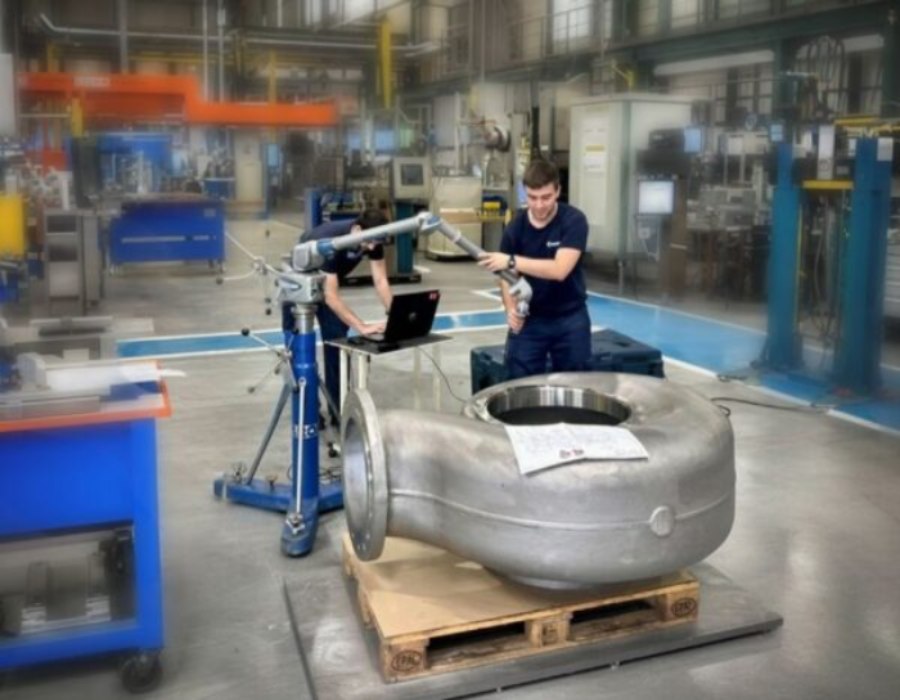
Measurement errors in industrial metrology are not just a “lab issue”: when dimensions are not measured correctly, the consequences show up as OEM rejections, leaks, vibration, cavitation, and cost of poor quality in pumps, valves, and industrial equipment. For an equipment manufacturer or a procurement manager, understanding where these errors come from and how to control them is key to reducing risk in critical projects.
At Asimer Group, we treat dimensional measurement errors as a technical and economic risk, not a minor anecdote. That’s why we combine metrology, CNC machining processes, and dimensional control criteria specifically tailored to pump and valve components.
What are measurement errors in industrial metrology?
In industrial metrology, we talk about dimensional measurement errors when there is a difference between the “true” value of a dimension and the value indicated by the measurement system. That difference may be caused by the instrument, the method, the environment, or the operator.
In the context of machined components for industrial pumps and valves, these errors become especially critical in:
- Diameters of seal and bearing housings.
- Flatness and parallelism on sealing faces.
- Concentricity between shafts, impellers, and casings.
- Functional surface finishes for seals and tightness (sealing) areas.
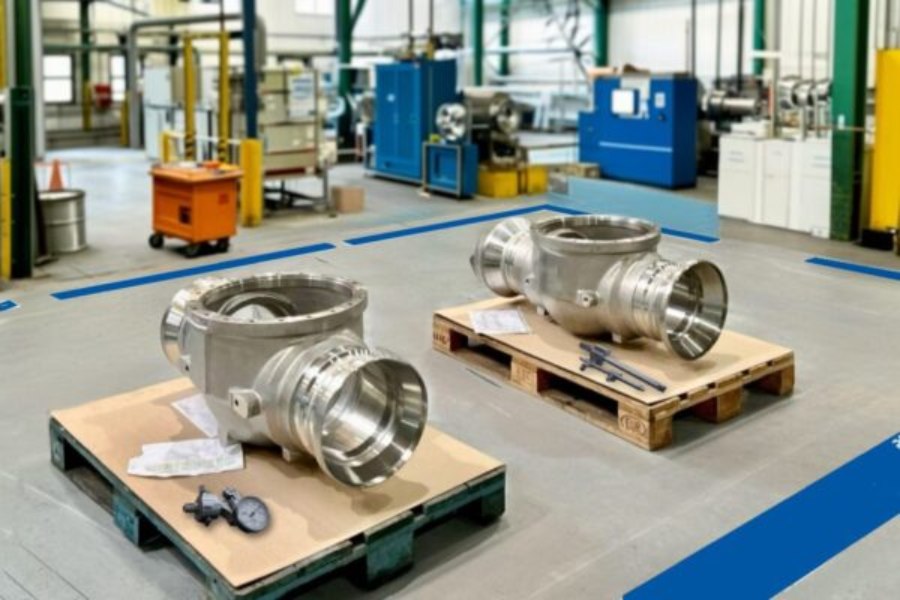
The key is not only having good measuring instruments, but designing the entire measurement system (procedures, environment, people, frequency, and acceptance criteria) to minimize errors and ensure traceability.
Most common causes of dimensional measurement errors
Measurement system and environmental errors
A frequent source of issues lies within the measurement system itself:
- Instruments out of tolerance or without periodic calibration.
- Temperature conditions deviating from the 20°C reference.
- Lack of humidity control and thermal stability in the measurement area.
That’s why it’s so important to have a properly conditioned metrology room and equipment verified by accredited entities. Without a controlled environment, even the best coordinate measuring machine (CMM) or the best portable measuring arm can deliver inconsistent results.
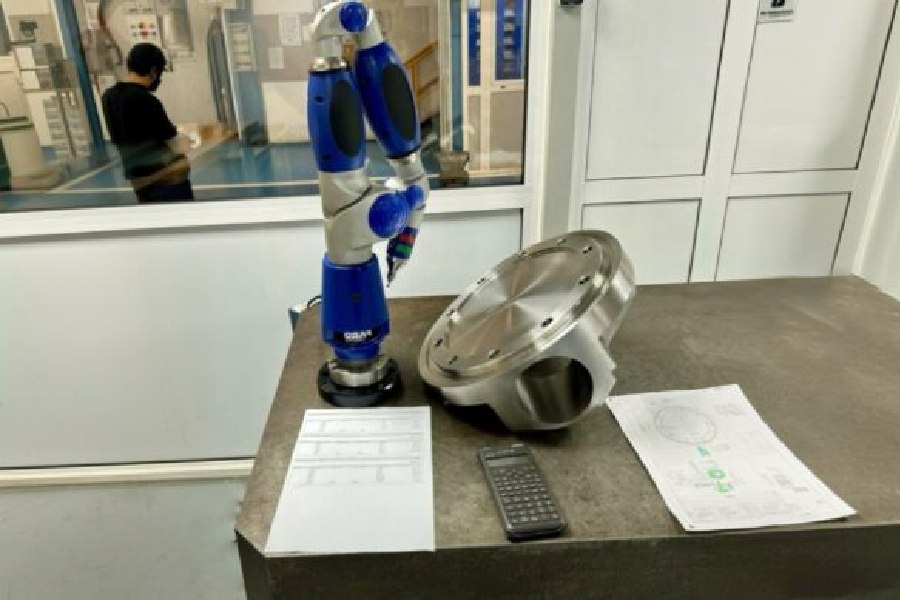
This is where the concept of precision in industrial metrology fits in: it’s not about “measuring with more decimals,” but about ensuring measurements are repeatable and traceable regardless of who measures or when the measurement is taken.
Method and process errors
Measurement errors also occur when the measurement method is not aligned with the functional purpose of the dimension:
- Measurements are taken at points that do not represent the functional area.
- The number of measurements and the averaging method are not defined.
- Proper fixtures or supports are not used to properly secure the part.
In parts machined through chip-removal machining, elastic deformation, internal stresses, or the sequence of operations often influence the dimensional result. If the measurement method does not account for these realities, the risk of dimensional measurement errors increases.
Human and interpretation errors
Even with good equipment and a solid method, the human factor remains decisive:
- Incorrect readings on a vernier scale or digital display.
- Misinterpretation of drawings (tolerance symbols, GD&T references/datums).
- Lack of specific training in metrology applied to pumps and valves.
That’s why reducing measurement errors also requires standardizing procedures, training personnel, and clearly documenting what is measured, with which instrument, and under which acceptance criteria.
How measurement errors affect industrial pumps and valves
In equipment such as centrifugal pumps, cryogenic pumps, or control valves, a dimensional error rarely stays “on paper.” It typically translates into:
- Assembly difficulties or the need for rework.
- Loss of tightness/sealing on sealing faces and seats.
- Imbalance in impellers and shafts, leading to vibration and reduced service life.
- Mismatch between components from different suppliers, with direct impact on the OEM.
In projects where precision machining is combined with non-destructive testing (NDT), a dimensional measurement error can even mask or worsen issues detected by other methods. For example:
- A weld bead that is acceptable according to NDT test types can become a problem if subsequent machining does not meet the functional dimension.
- A component that passes a liquid penetrant test may still be unacceptable if there are dimensional deviations in critical sealing areas.
The end result is always the same: in-service risk, potential leaks, customer claims, and an increase in the cost of poor quality.
Strategy to Reduce Measurement Errors: From the Metrology Room to Production
Reducing dimensional measurement errors is not achieved by “buying more instruments,” but by designing a system that connects metrology and production. At Asimer Group, we approach it on three levels:
1. Measurement infrastructure and equipment
- Use of the right Measuring instruments for each range and required accuracy.
- Controlled conditions in the metrology room for critical measurements.
- Integration of equipment such as a portable measuring arm for inspecting large parts or complex geometries.
This approach makes it possible to adapt metrology to both small components and large-dimension pump and valve casings and bodies.
2. Machining processes and accuracy
The best way to avoid measurement errors is to design the machining process so parts come out right the first time. That’s why we work with CNC machining routes and chip-removal machining strategies aligned with functional requirements.
Here, the content around CNC machining accuracy fits naturally where the key is to:
- Choose the right sequence of operations.
- Control tools, fixturing, and datums/references.
- Define what is measured in-machine and what is validated in metrology.
3. Procedures, training, and traceability
The third pillar for reducing measurement errors in machined parts is procedural:
- Clear measurement instructions by part family or functional zone.
- Systematic recording of results and trend analysis.
- Integration with Non-destructive testing plans and customer requirements.
In regulated sectors, certification in non-destructive testing strengthens this traceability and helps demonstrate that the measurement system is controlled and audited.
How Asimer Group addresses measurement errors in pump and valve projects
At Asimer Group, as a machining company, we don’t “manufacture measuring instruments”: we work as a partner for machining, welding, and metrology applied to pumps, valves, and industrial equipment. That means we tackle dimensional measurement errors from the very start of the project:
- Reviewing functional tolerances and critical zones on the drawing.
- Defining what is controlled in-machine and what goes through metrology.
- Aligning CNC machining, measuring instruments, non-destructive testing, and the OEM’s documentation requirements.
When a manufacturer entrusts us with casings, covers, shafts, impellers, or valve components, the goal is not just to “hit the dimension,” but to reduce rejects, improve repeatability, and make dimensional control stop being a recurring pain point in the supply chain.
This is where it helps to know what type of component you’re working with, what critical tolerances you handle, and what measurement problems you’re seeing today in your process.
Do you need to reduce measurement errors in machined components for pumps or valves?
Tell us the component type, critical tolerances, inspection requirements (dimensional and NDT), and industry (Oil & Gas, cryogenics, naval, water treatment, etc.). We’ll review your case from a technical standpoint and propose a dimensional control and applied metrology strategy.
Request a Dimensional Control ReviewFrequently asked questions about dimensional measurement errors
Why do measurement errors occur even if I have good instruments?
Because the accuracy of a measurement system doesn’t depend only on the instrument. It also depends on the environment (temperature, vibration), the defined method, and the training of the people taking the measurements. Without a proper metrology room and clear procedures, inconsistent results are common.
What risks do measurement errors create in pumps and valves?
Dimensional measurement errors can cause assembly issues, leaks, vibration, cavitation, and reduced service life. In OEM projects, these errors often lead to claims, delays, and higher cost of poor quality. Combining a robust CNC machining process with applied metrology significantly reduces this risk.
How can I tell if I have a systematic measurement error problem?
Typical signs include discrepancies between your measurements and the customer’s, inconsistent results across shifts, continuous drift on certain dimensions, or recurring rejects on the same features. A combined review of measuring instruments, method, and environment usually reveals the root cause.
What’s the relationship between measurement errors and non-destructive testing (NDT)?
NDT and dimensional inspection are complementary: one verifies material integrity and weld quality; the other verifies geometry and tolerances. However, if dimensional measurement errors exist, you may accept or reject parts incorrectly—even if NDT methods are correctly applied. That’s why having well-implemented processes (including proper NDT certification and control) matters.
When does it make sense to outsource dimensional control and metrology?
When you work with critical pump and valve parts, very tight tolerances, or batches that require advanced equipment that isn’t cost-effective to keep in-house. In those cases, relying on a partner with the right measuring instruments, a controlled metrology room, and proven experience in chip-removal machining and CNC machining for these components is often the most efficient option.