
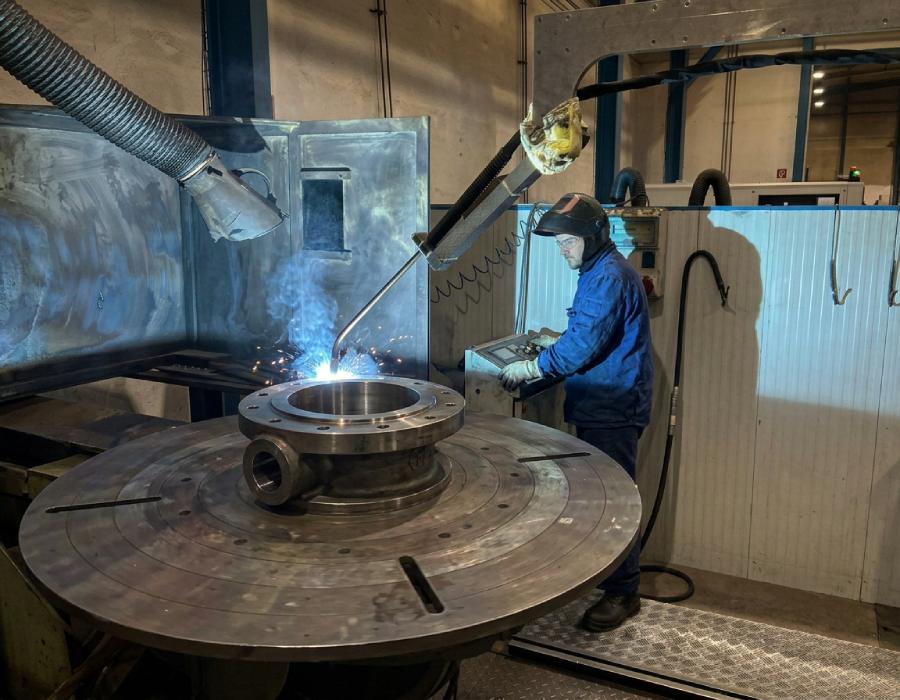
Automating a MIG welding process can provide repeatability, parameter stability, productivity and greater technical control. However, not every industrial project justifies the use of automation. The decision should start with a technical assessment of the component, material, geometry, workload, quality requirements and the subsequent stages of the project.
In many cases, the question is not only whether a weld can be automated, but whether it is actually worth automating. A one-off component, with highly variable geometry or low repetition, may require a different approach from a series of components with similar weld beads, stable requirements and defined quality controls.
That is why, before choosing between manual welding, conventional MIG welding or automated MIG welding, the entire project should be analysed. In industrial environments, welding rarely works as an isolated stage: it may be linked to subsequent machining, dimensional inspection, non-destructive testing, technical documentation or specific customer requirements.
This article explains when to automate a MIG welding process, which technical factors should be assessed and how to differentiate a project that can benefit from automation from one where a conventional process may be sufficient.
What it means to automate a MIG Welding process
Automating a MIG welding process does not simply mean adding a machine or a robotic system. In an industrial environment, automation should be understood as a way to better control repetition, parameters and process stability when the project requires it.
Automated MIG welding can allow for more uniform execution in repetitive operations, especially when there are similar parts, recurring weld beads or productivity requirements. It can also help reduce variations between operations and maintain more stable working conditions.
Even so, automation should not be considered a universal solution. Its usefulness depends on the geometry of the part, accessibility to the welding area, type of joint, material, thicknesses and final technical requirements.
In industrial projects, an automated MIG welding service should always start with a previous assessment. The goal is not to automate for the sake of automation, but to apply the process when it provides real technical value to the component and to the project as a whole.
When it makes sense to automate a MIG welding process
Welding process automation can be especially useful when the project involves repetitive operations or technical requirements that demand stability between parts. In these cases, industrial automated welding can help maintain greater control over execution.
One of the clearest scenarios is repetitive components. If a company needs to manufacture several parts with similar geometries and comparable weld beads, automation can provide uniformity and reduce variations between operations.
It can also be interesting for industrial series or batches where execution time and process stability have a direct impact on productivity. In these projects, automatic MIG welding can help maintain more consistent conditions during manufacturing.
Another common case appears when weld bead uniformity is important for the subsequent performance of the part. If the component will later undergo machining, dimensional control or inspection, a more stable weld can help coordinate the different stages of the project.
Automation can also provide value when the goal is to reduce rework, quality incidents or differences between parts. In these cases, controlling parameters such as travel speed, filler material, current, speed or position can be decisive for improving process repeatability.
In summary, automation should be considered when there are repetitive parts, industrial series or batches, stable geometries, similar weld beads, uniformity requirements, productivity needs, integration with subsequent machining, associated quality controls or technical project documentation.
When MIG welding should not be automated
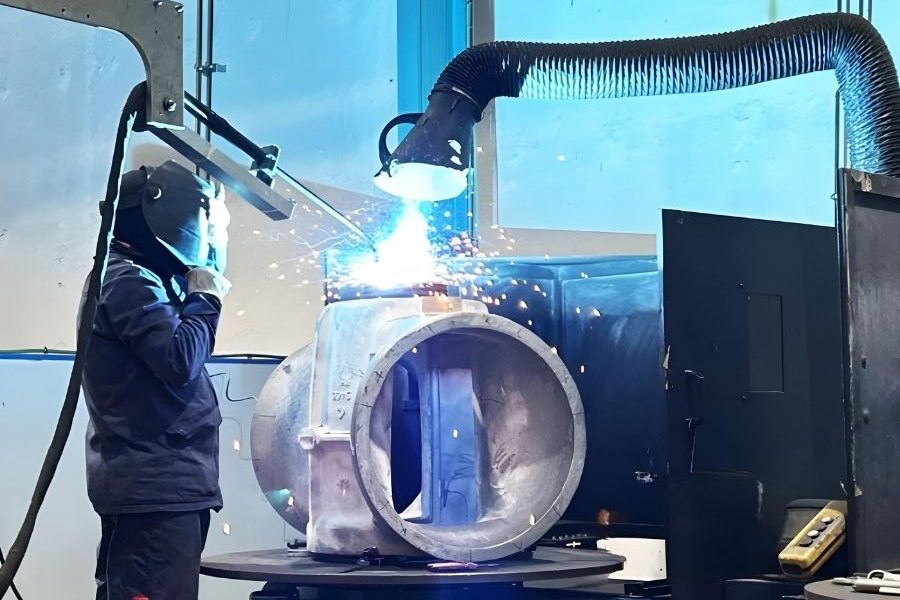
Automation is not always the best decision. In some projects, a conventional MIG process may be more suitable due to flexibility, volume or variation in the part.
For example, if the project involves a one-off part with complex geometry and no repetition, automation may not provide enough benefit. The same applies when each component requires constant operator adjustment, changes in position or very different access conditions.
Automation may also not be suitable when the workload is low and the technical cost of preparing the process is not justified. In these cases, manual or semi-automatic welding can offer greater flexibility and a more efficient response.
Another important case is when the geometry prevents a stable path from being maintained or when access to the welding area is limited. If the automated process cannot be carried out reliably, automation may create more problems than advantages.
For this reason, a correct technical decision must consider both benefits and limitations. Automated MIG welding should not be presented as an automatic replacement for every process, but as a suitable option when the project allows it and justifies it.
Technical factors to analyse before automating
Before automating a MIG welding process, a series of technical factors should be reviewed. This assessment helps determine whether automation can improve the result or whether it is preferable to maintain a more flexible process.
The first factor is the material. Not all materials respond to the process in the same way, and some may require specific conditions for filler material, temperature, preparation or control.
The thickness of the part and the type of joint must also be analysed. Welding industrial components can vary greatly depending on whether the work involves longitudinal joints, circumferential joints, build-up areas, reinforcements, repairs or structural elements.
Geometry is another key point. To automate with confidence, the part must allow for a stable path and a reasonable degree of process repetition. If each weld bead requires a different adjustment, automation may lose efficiency.
Accessibility also influences the decision. It is not enough for the process to be technically feasible: the working area must allow the equipment to be positioned, travel to be controlled and suitable execution conditions to be maintained.
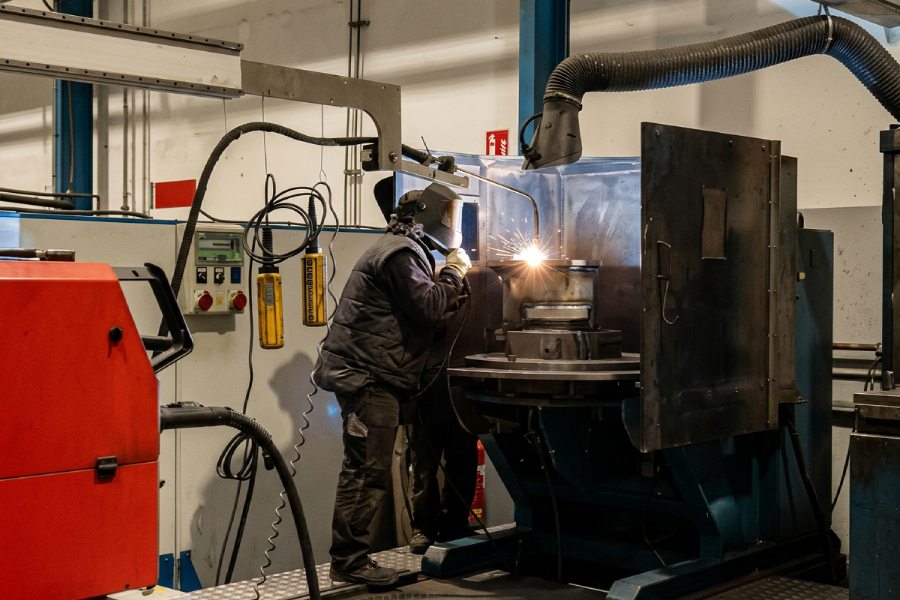
In addition, it is necessary to assess whether the part will go through subsequent stages. When a component requires machining, inspection or dimensional control, welding must be planned with the final result in mind. At this point, coordination with CNC machining of industrial components can be decisive in avoiding issues between stages.
Other important factors include inspection requirements, technical documentation, traceability, quality controls and final component tolerances.
How to choose between conventional MIG and process automation
The choice between conventional MIG and process automation depends on the technical objective of the project. It is not about deciding which process is better in general, but which one fits the part, repetition and final requirements more effectively.
Conventional industrial MIG welding may be suitable when the project requires flexibility, manual adaptation or work on parts with greater variability. It can also be useful in jobs where the volume does not justify automated preparation.
By contrast, process automation can provide value when greater repeatability, parameter stability and productivity are required in recurring operations. This is especially relevant when working with similar parts, repeated weld beads or uniformity requirements.
The key is to assess the project as a whole. If the part requires many adjustments, changes in position or one-off solutions, automation may not be the main option. If the project requires repetition, control and reduced variability, automated MIG welding can become a very interesting solution.
It should also be remembered that automation does not remove the need for technical judgement. Process definition, part preparation, parameter review, quality control and coordination with other stages remain essential.
Why machining, inspection and quality should be considered before automating
In industrial components, welding should not be analysed in isolation. Many welded parts later require machining, inspection, dimensional control or quality documentation. If these stages are not considered from the beginning, deviations, rework or fitting issues may appear.
For example, welding can affect areas that later need to be machined. It can also generate distortion, excess material or conditions that must be anticipated before moving on to the next stage. That is why it is important to assess the complete process, not just the welding operation.
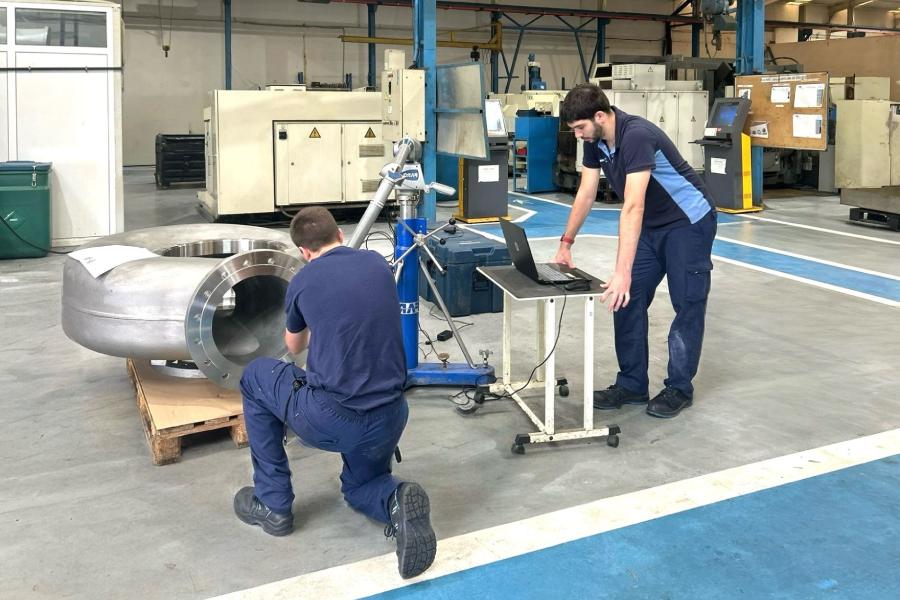
Inspection also plays a key role. In some projects, visual inspection, penetrant testing, dimensional control or other tests may be required depending on customer specifications. This means that the weld must be executed consistently with the subsequent controls.
In certain components, the main requirement may not be an automated MIG joint, but another welding or build-up process. For example, some projects may require industrial TIG welding due to precision or material characteristics, while others may need PTA welding for industrial coatings, hardfacing or specific overlays in areas subject to wear.
This previous assessment helps avoid incorrect decisions. Automation only makes sense if the process fits the function of the part, the subsequent stages and the technical requirements of the project.
Types of projects where automation can provide technical value
Welding process automation can provide value in projects where repetition, stability and technical control have a direct impact on the final result.
One of the most common cases involves industrial components with similar weld beads or repeatable geometries. When several parts are manufactured with similar requirements, automated welding can help maintain more uniform execution.
It can also provide value in components associated with industrial pumps, valves, compressors, process equipment or metal structures that require welding and subsequent machining or inspection stages.
In sectors such as Oil & Gas, petrochemical, naval, water, desalination, cryogenics, paper mill and energy, projects often require technical control, traceability and process coordination. In these environments, making the right decision about automation can help improve component reliability and reduce manufacturing incidents.
However, the sector alone is not enough to decide. What matters is the specific project: part, material, geometry, volume, quality requirements, documentation and necessary controls.
What information a supplier needs to assess the process
To assess whether it makes sense to automate a MIG welding process, it is useful to provide technical information from the beginning. The clearer the project scope is, the more precise the recommendation will be.
The most important data include the type of part, material, thicknesses, geometry, number of units, type of joint, accessibility of the welding area and quality requirements.
It is also useful to indicate whether the part will undergo subsequent machining, whether dimensional inspection is required, whether non-destructive testing has been defined or whether the customer needs technical documentation associated with the project.
In some cases, it is also important to know the working conditions of the component: pressure, temperature, wear, fluid, corrosive environment or sector of application. These details help determine whether automated MIG welding is sufficient or whether another complementary process should be considered.
The final decision should be based on a complete view of the component, not only on the welding operation.
Frequently asked questions about when to automate a MIG Welding Process
When does it make sense to automate a MIG welding process?
Automation should be considered when there are repetitive parts, similar weld beads, industrial series, uniformity requirements, productivity needs or integration with subsequent stages such as machining, inspection or dimensional control.
Does automated MIG welding always replace conventional MIG welding?
No. Conventional MIG welding may be more suitable for one-off parts, variable geometries or jobs that require greater flexibility. Automation makes sense when the project allows stable and controlled conditions to be repeated.
What technical factors should be reviewed before automating a weld?
Before automating, it is important to analyse the material, thickness, type of joint, geometry, accessibility, workload, quality requirements, inspection, subsequent machining and necessary technical documentation.
Does automating a MIG welding process mean buying a machine or robot?
Not necessarily. In an industrial environment, automation can mean outsourcing a more controlled, repeatable and stable welding process without the customer having to purchase their own equipment.
What is the difference between automatic MIG welding and industrial automated welding?
Automatic MIG welding refers to the MIG process being carried out with a higher degree of automation. Industrial automated welding is a broader concept that may include different processes, control systems and solutions adapted to the type of component or project.
Can welding automation be combined with CNC machining?
Yes. In many industrial projects, welding must be coordinated with CNC machining, dimensional inspection, non-destructive testing or quality documentation to ensure that the component meets the final requirements.
What information does Asimer Group need to assess whether automation is suitable?
To assess the project, it is useful to know the type of part, material, geometry, thicknesses, number of units, type of joint, quality requirements, necessary inspections and whether there are subsequent stages such as machining or dimensional control.
Assess whether your project fits automated MIG Welding
Automating a MIG welding process can be a very useful decision when the project requires repeatability, parameter stability, productivity and technical control. But it may also be unnecessary if the part requires flexibility, low repetition or a more adapted solution.
That is why, before making a decision, it is advisable to analyse the component, material, geometry, workload, quality requirements and integration with subsequent stages such as machining, inspection or dimensional control.
At Asimer Group, we assess each project from a technical perspective to determine whether automated MIG welding is suitable and how it can be integrated with the rest of the required industrial processes.